
A toothache is a physiological signal indicating underlying dental pathology, ranging from minor enamel erosion to systemic infections. Understanding how to relieve a toothache involves differentiating between temporary symptomatic relief and definitive clinical intervention.
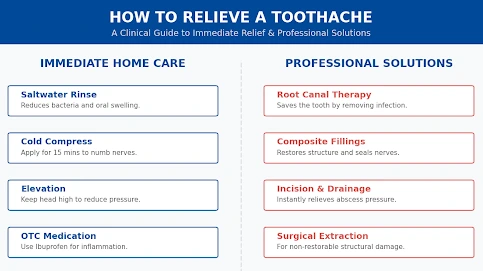
Professional dental treatment costs are determined by the complexity of the underlying pathology. While localized fillings are cost-effective, complex procedures like endodontic therapy (root canals) or surgical extractions require specialized equipment and expertise. Early intervention is the most effective way to minimize both physiological pain and financial expenditure.
Dental pain, or odontalgia, occurs when the internal nerves of a tooth are stimulated by external or internal triggers. To effectively manage the condition, one must identify the specific cause:
Reversible Pulpitis: Mild inflammation where the tooth reacts to temperature but the nerve is still salvageable.
Irreversible Pulpitis: Severe inflammation where the nerve is dying and requires removal.
Periapical Abscess: An accumulation of pus at the root tip, causing intense pressure and throbbing.
Dentin Hypersensitivity: Exposed root surfaces reacting to thermal or chemical stimuli.
If immediate clinical access is unavailable, follow these protocols to mitigate discomfort:
Certain symptoms indicate that the infection may be progressing toward systemic involvement. Seek emergency care if you notice:
Professional intervention focuses on removing the source of the infection or irritation:
Real Testimonials from Our Patients
DentalAYS is rated "Excellent" on Trustpilot.
See All Reviews ➔At Dentalays, we utilize a data-driven approach to endodontic and restorative care:
Keep your head elevated with extra pillows to reduce blood pressure in the dental area, and take an anti-inflammatory (NSAID) approximately 30 minutes before sleep.
Antibiotics can suppress a bacterial infection, but they do not remove the source of the pain (such as a cavity or dead nerve). The pain will return unless a dental procedure is performed.
With modern anesthesia, a root canal is no more painful than getting a standard filling. In fact, the procedure is designed to stop the intense pain of an infected nerve.
A combination of topical benzocaine gel and an oral NSAID (like Ibuprofen) provides the fastest temporary relief for acute dental pain.
Cold sensitivity often indicates reversible pulpitis or exposed roots, whereas sensitivity to heat often suggests the nerve is dying and may require a root canal.
The 3-3-3 rule is a common guideline for managing acute dental pain: taking 3 Ibuprofen (200mg each) and 3 Paracetamol (325mg each) 3 times a day (every 8 hours). Note: Always consult a doctor before mixing medications.
Painkillers only mask the symptoms by blocking pain signals. If you have an active infection, an abscess, or a dying nerve, the underlying pressure and inflammation will persist until a dentist removes the source of the infection through a root canal or extraction.
When you lie down, blood rushes to your head, increasing the blood pressure in your oral cavity. This extra pressure on the sensitive, inflamed nerve inside your tooth exacerbates the throbbing pain.
Garlic contains allicin, a natural antibacterial and anesthetic compound. While chewing a clove or applying garlic paste might provide temporary numbing and fight surface bacteria, it cannot cure a deep root infection or a cavity.