Table of Contents
- • Toothache Treatment and Clinical Costs
- • Biological Pathophysiology: Why Teeth Hurt
- • Immediate Protocols: How to Relieve a Toothache at Home
- • Diagnostic Indicators: When a Toothache Becomes an Emergency
- • Evidence-Based Clinical Treatments for Dental Pain
- • Professional Excellence: The Dentalays Approach
- • Frequently Asked Questions (FAQ)
How to Relieve a Toothache: Clinical Guide to Immediate Relief and Treatments
A toothache is a physiological signal indicating underlying dental pathology, ranging from minor enamel erosion to systemic infections. Understanding how to relieve a toothache involves differentiating between temporary symptomatic relief and definitive clinical intervention.
Toothache Treatment and Clinical Costs
Professional dental treatment costs are determined by the complexity of the underlying pathology. While localized fillings are cost-effective, complex procedures like endodontic therapy (root canals) or surgical extractions require specialized equipment and expertise. Early intervention is the most effective way to minimize both physiological pain and financial expenditure.
Biological Pathophysiology: Why Teeth Hurt
Dental pain, or odontalgia, occurs when the internal nerves of a tooth are stimulated by external or internal triggers. To effectively manage the condition, one must identify the specific cause:
Reversible & Irreversible Pulpitis
Reversible Pulpitis: Mild inflammation where the tooth reacts to temperature but the nerve is still salvageable.
Irreversible Pulpitis: Severe inflammation where the nerve is dying and requires removal.
Abscess & Hypersensitivity
Periapical Abscess: An accumulation of pus at the root tip, causing intense pressure and throbbing.
Dentin Hypersensitivity: Exposed root surfaces reacting to thermal or chemical stimuli.
Immediate Protocols: How to Relieve a Toothache at Home
If immediate clinical access is unavailable, follow these protocols to mitigate discomfort:
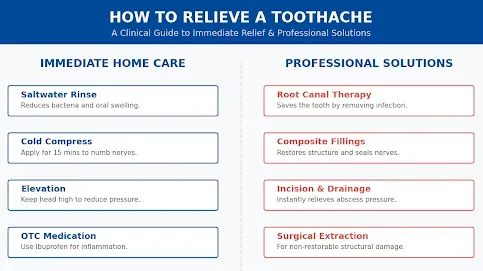
- Saltwater Osmosis: Rinse with warm saline solution (1/2 tsp salt in 250ml water). This creates an osmotic gradient that helps reduce tissue edema (swelling).
- NSAID Administration: Ibuprofen is typically the preferred analgesic for dental pain as it inhibits prostaglandin synthesis, directly reducing inflammation around the dental nerve.
- Cold Therapy: Apply a cold compress to the external cheek area for 15 minutes. This induces localized vasoconstriction, slowing the inflammatory response.
- Topical Benzocaine: Use over-the-counter numbing gels containing benzocaine to temporarily desensitize the gingival tissue and nerve endings.
Diagnostic Indicators: When a Toothache Becomes an Emergency
Certain symptoms indicate that the infection may be progressing toward systemic involvement. Seek emergency care if you notice:
- Extraoral Swelling: Visible swelling in the cheek, jaw, or neck area.
- Trismus: Difficulty opening the mouth or swallowing.
- Pyrexia (Fever): A clear sign that the body is fighting a spreading infection.
- Persistent Spontaneous Pain: Pain that occurs without a trigger, often waking the patient at night.
Evidence-Based Clinical Treatments for Dental Pain
Professional intervention focuses on removing the source of the infection or irritation:
Real Testimonials from Our Patients
DentalAYS is rated "Excellent" on Trustpilot.
See All Reviews ➔Professional Excellence: The Dentalays Approach to Pain Management
At Dentalays, we utilize a data-driven approach to endodontic and restorative care:
- Precision Diagnostics: Using 3D Imaging (CBCT) to visualize hidden infections that standard X-rays might miss.
- Pain-Free Anesthesia: Advanced localized numbing techniques to ensure the patient feels zero discomfort during the procedure.
- High-Performance Materials: We exclusively use premium, medical-grade materials for all crowns, fillings, and implants to ensure long-term biocompatibility.
- Fast-Track Emergency Care: Our clinical workflow is optimized to prioritize patients in acute pain for same-day stabilization.
Frequently Asked Questions (FAQ)
How Can I Stop a Toothache from Throbbing at Night?
Keep your head elevated with extra pillows to reduce blood pressure in the dental area, and take an anti-inflammatory (NSAID) approximately 30 minutes before sleep.
Can an Antibiotic Cure a Toothache?
Antibiotics can suppress a bacterial infection, but they do not remove the source of the pain (such as a cavity or dead nerve). The pain will return unless a dental procedure is performed.
Is a Root Canal Painful?
With modern anesthesia, a root canal is no more painful than getting a standard filling. In fact, the procedure is designed to stop the intense pain of an infected nerve.
What is the Fastest Way to Numb a Toothache?
A combination of topical benzocaine gel and an oral NSAID (like Ibuprofen) provides the fastest temporary relief for acute dental pain.
Why Is My Tooth Sensitive to Cold But Not Hot?
Cold sensitivity often indicates reversible pulpitis or exposed roots, whereas sensitivity to heat often suggests the nerve is dying and may require a root canal.
What is the 3-3-3 rule for toothache?
The 3-3-3 rule is a common guideline for managing acute dental pain: taking 3 Ibuprofen (200mg each) and 3 Paracetamol (325mg each) 3 times a day (every 8 hours). Note: Always consult a doctor before mixing medications.
Why Won't My Toothache Go Away With Painkillers?
Painkillers only mask the symptoms by blocking pain signals. If you have an active infection, an abscess, or a dying nerve, the underlying pressure and inflammation will persist until a dentist removes the source of the infection through a root canal or extraction.
Why is Tooth Pain Worse at Night?
When you lie down, blood rushes to your head, increasing the blood pressure in your oral cavity. This extra pressure on the sensitive, inflamed nerve inside your tooth exacerbates the throbbing pain.
Does Garlic Get Rid of Toothache?
Garlic contains allicin, a natural antibacterial and anesthetic compound. While chewing a clove or applying garlic paste might provide temporary numbing and fight surface bacteria, it cannot cure a deep root infection or a cavity.